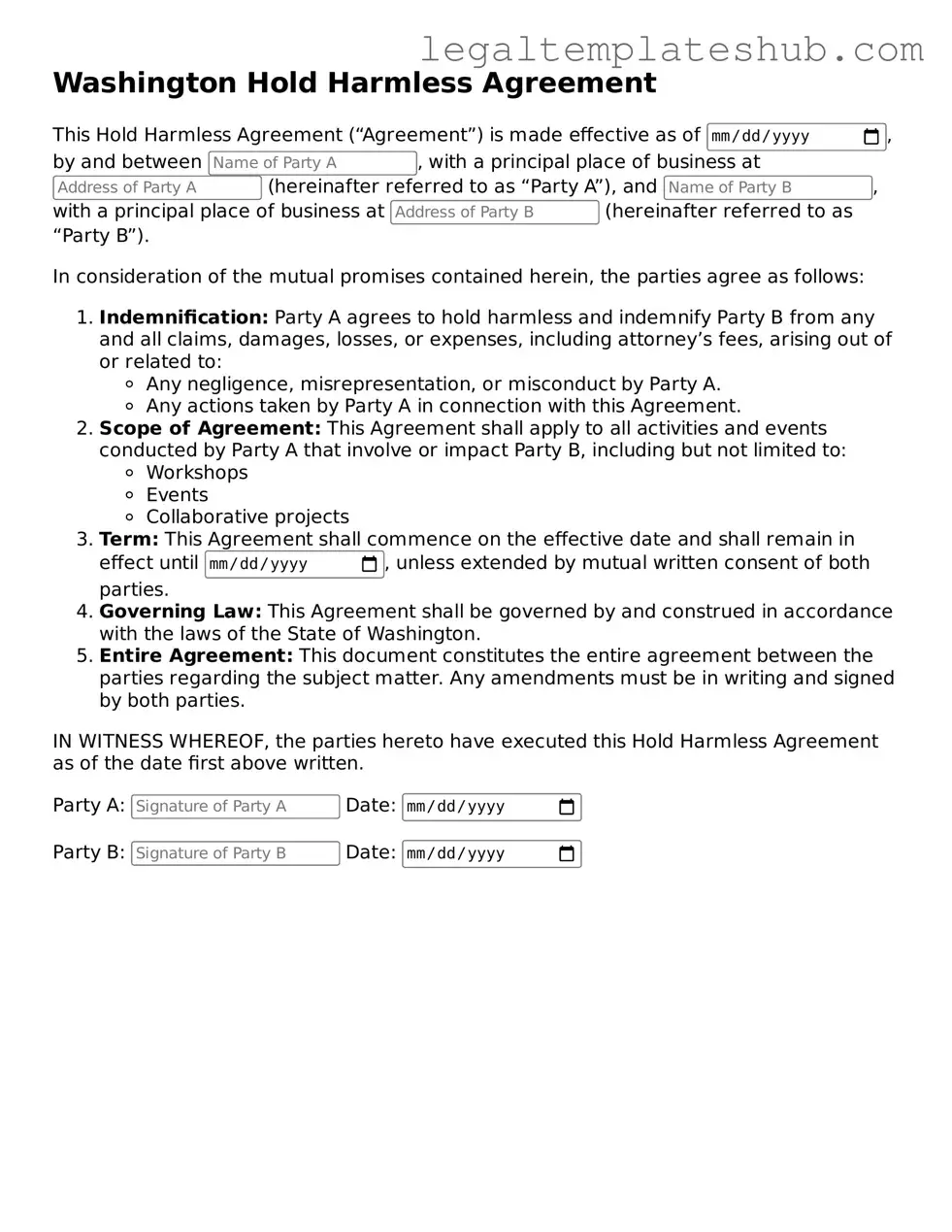
Printable Hold Harmless Agreement Document for Washington
PDF Form Data
| Fact Name | Details |
|---|---|
| Purpose | The Washington Hold Harmless Agreement is designed to protect one party from liability for damages or injuries that may occur during an event or activity. |
| Governing Law | This agreement is governed by the laws of the State of Washington. |
| Parties Involved | Typically, the agreement involves at least two parties: the indemnitor (the party agreeing to hold harmless) and the indemnitee (the party being protected). |
| Scope of Protection | The agreement can cover various types of liabilities, including personal injury, property damage, and legal fees. |
| Written Requirement | For enforceability, the agreement must be in writing and signed by both parties. |
| Limitations | Washington law may impose limitations on the enforceability of hold harmless agreements in certain situations, such as gross negligence. |
| Common Uses | This agreement is often used in contracts for events, rentals, and construction projects. |
| Legal Review | It is advisable to have the agreement reviewed by a legal professional to ensure it meets all legal requirements and adequately protects the parties involved. |
Key takeaways
When filling out and using the Washington Hold Harmless Agreement form, consider the following key takeaways:
- Understand the Purpose: The Hold Harmless Agreement is designed to protect one party from legal liability for damages or injuries that may occur during an activity or event.
- Identify the Parties: Clearly specify the names and roles of all parties involved in the agreement to avoid any confusion later on.
- Detail the Activities: Outline the specific activities or events covered by the agreement. This ensures that all parties are aware of the scope of protection.
- Review State Laws: Familiarize yourself with Washington state laws regarding liability and indemnity to ensure compliance and effectiveness of the agreement.
- Obtain Signatures: Ensure that all parties sign the agreement before any activities commence. This step is crucial for the agreement to be enforceable.
By keeping these takeaways in mind, you can effectively utilize the Washington Hold Harmless Agreement form to safeguard your interests.
Dos and Don'ts
When filling out the Washington Hold Harmless Agreement form, it's essential to approach the task with care. This document can protect you from potential liabilities, but accuracy is crucial. Here are some important do's and don'ts to keep in mind:
- Do read the entire agreement thoroughly before starting.
- Do ensure all parties involved understand the terms and conditions.
- Do fill in all required fields completely and accurately.
- Do sign and date the agreement where indicated.
- Do keep a copy for your records after submission.
- Don't leave any blank spaces unless instructed.
- Don't use legal jargon or complicated language; keep it simple.
- Don't rush through the process; take your time to review.
- Don't sign the document without fully understanding your obligations.
By following these guidelines, you can help ensure that your Hold Harmless Agreement is completed correctly and serves its intended purpose effectively.
More Hold Harmless Agreement State Templates
Hold Harmless Indemnity Agreement - This form can outline specific risks that each party accepts.
The important Medical Power of Attorney document is crucial for those who wish to ensure their medical choices are followed when they cannot communicate their wishes.
Release and Hold Harmless Agreement - Hold Harmless Agreements are essential for protecting assets and financial interests during risky activities.
What Is Hold Harmless Agreement - This agreement can enhance safety in corporate events or functions.
Instructions on Filling in Washington Hold Harmless Agreement
After obtaining the Washington Hold Harmless Agreement form, you will need to complete it carefully to ensure that all necessary information is accurately provided. This will help in processing your agreement smoothly.
- Begin by entering the date at the top of the form.
- Provide your full name in the designated section.
- Fill in your address, including city, state, and zip code.
- Identify the party or parties you are entering into the agreement with.
- Clearly outline the specific activities or events covered by the agreement.
- Include any additional terms or conditions as required.
- Sign and date the form at the bottom.
- Have a witness sign if required by the form's instructions.
Once completed, review the form to ensure all information is correct before submitting it to the relevant party or organization.
Misconceptions
The Washington Hold Harmless Agreement is often misunderstood. Below are six common misconceptions about this form, along with clarifications to help individuals better understand its purpose and implications.
- Misconception 1: The Hold Harmless Agreement protects against all forms of liability.
- Misconception 2: Signing the agreement means you cannot be sued.
- Misconception 3: The agreement is only necessary for businesses.
- Misconception 4: The agreement is legally binding in all circumstances.
- Misconception 5: You can use a generic template without any modifications.
- Misconception 6: The agreement absolves one party of all responsibility.
This is incorrect. While the agreement does provide some level of protection, it does not cover all types of liability. Certain actions, such as gross negligence or willful misconduct, may still expose a party to liability.
This is misleading. Signing a Hold Harmless Agreement does not completely eliminate the possibility of a lawsuit. It can limit liability in specific situations, but it does not prevent legal action from being taken.
This is false. Individuals engaging in activities that could result in injury or damage may also benefit from a Hold Harmless Agreement. It is relevant for various contexts, including personal events and community activities.
This is not always true. The enforceability of a Hold Harmless Agreement depends on several factors, including the clarity of the language used and the specific circumstances surrounding the agreement.
This is a risky assumption. Each situation is unique, and using a generic template without tailoring it to specific needs may lead to inadequate protection or unenforceability.
This is a common misunderstanding. While it may limit liability, it does not absolve a party of all responsibility. Both parties must still adhere to applicable laws and regulations.